You press the accelerator, the engine roars, but the car doesn’t pick up speed the way it used to. If that sounds familiar, your clutch could be starting to slip. It usually happens gradually, so a lot of drivers get used to it without realising something is wrong.
This guide covers the most common signs of clutch slipping, a safe way to check for it at home, other problems that can feel similar, and what to do next.
Disclaimer: This guide is general information, not a diagnosis of your car. Clutch designs vary between makes and models, and some symptoms can have more than one cause. How fast a clutch wears, or how much extra fuel a slipping one uses, depends on your car and how you drive, so treat those points as a rough guide. For advice about your own vehicle, check your owner’s manual or have a qualified mechanic inspect it in person.
What Does Clutch Slipping Actually Mean?
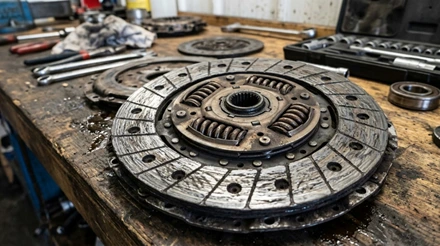
In a manual car, the clutch is the link between the engine and the gearbox. When your foot is off the pedal, a spring-loaded pressure plate clamps a friction disc against the flywheel, which is bolted to the engine. That firm grip is what sends power through to the wheels.
When you press the pedal, the clamp lets go so you can change gears. As you lift your foot again, the grip comes back and the car moves.
A clutch slips when that grip isn’t strong enough anymore. Instead of locking firmly to the flywheel, the disc spins slightly against it, and some of the engine’s power turns into heat instead of moving the car. It’s a bit like a worn brake pad: once there isn’t enough friction material left, it can’t hold the way it should.
6 Common Signs of Clutch Slipping
Most clutch slipping symptoms show up when the engine is working hard. A gentle drive to the shops might feel completely normal, which is why the problem can go unnoticed for weeks.
1. The Revs Jump but Your Speed Doesn’t
This is the sign most people notice first. You put your foot down and the rev needle climbs quickly, but the car speeds up slowly, almost like it’s a step behind the engine. Sometimes the revs flare for a moment just after a gear change and then settle once the clutch finally grabs.
2. It Gets Worse in Higher Gears or Under Load
Slip often shows up first in third, fourth or fifth gear when you accelerate hard from low revs. It becomes more obvious whenever the car is working harder. Climbing a hill, merging onto the freeway, carrying a full load or towing are all common examples.
3. A Sharp Burning Smell
All that slipping creates heat, and the heat cooks the friction material on the clutch disc. The result is a sharp, acrid smell, a little like overheated brakes. You’ll usually notice it after a hill start or a long crawl through peak-hour traffic.
4. The Bite Point Has Moved Higher
The bite point is the spot where the clutch starts to grab as you lift the pedal. As the friction disc wears thinner, that point usually creeps higher up the pedal’s travel. If the car only starts moving when your foot is almost all the way up, the clutch is likely nearing the end of its life.
5. Shuddering When You Pull Away
A judder or shake as you take off from a standstill can mean the clutch is grabbing and letting go unevenly. This can happen when the disc is glazed or contaminated, or when the flywheel surface is damaged. Worn engine mounts can cause a similar feeling, so it’s worth having it properly checked rather than guessing.
6. Less Power and Higher Fuel Use
Because some of the engine’s effort is lost as heat, the car can feel flat and sluggish even in everyday driving. You may find yourself pressing harder on the accelerator just to keep up with traffic. Over time, your fuel use may creep up as well.
How to Tell If Your Clutch Is Slipping: A Simple Road Test
If you’ve noticed one or two of these signs, a quick road test can help you confirm it. Only try this on a quiet, flat road where it’s safe and legal, and stay within the speed limit.
- Drive at a steady, low speed in third or fourth gear so the revs are sitting fairly low.
- Press the accelerator down firmly in one smooth movement.
- Watch the rev counter and the speedometer at the same time.
On a healthy clutch, the revs and your speed rise together. If the revs shoot up while the car barely gains speed, the clutch is very likely slipping.
Try it once or twice at most, because each attempt adds more heat to a clutch that’s already struggling. You might also see a “stall test” online, where you rev the engine with the handbrake on and let the clutch out. That test is hard on the car and is best left to a mechanic, who can check the pedal and hydraulics at the same time.
Is It the Clutch or Something Else?
The symptoms of clutch problems can overlap with a few other faults. This table can help you narrow things down before you book your car in.
| Problem | What it feels like | Key clue |
| Slipping clutch | Revs rise but speed lags behind, mostly in higher gears | Manual car, dry road, happens under load |
| Wheelspin | Revs rise and the car squirms or a wheel spins | Mostly on wet or loose surfaces, and more likely with worn tyres that have lost their grip |
| Automatic transmission slipping | Revs flare during or between gear changes, with harsh or delayed shifts | Only happens in automatic cars |
| Limp mode | Car feels weak and won’t rev much at all | A warning light is usually on, and it calls for proper engine diagnostics |
| Clutch hydraulic fault | Soft, spongy or sinking pedal, and gears are hard to select | Low fluid, visible leaks, or a pedal that doesn’t fully return |
| Wheel imbalance | Vibration that builds as your speed goes up | Not linked to pulling away or changing gears, and usually sorted with wheel balancing |
The simplest way to remember the difference is this: a slipping clutch lets the engine rev freely while the car falls behind, while limp mode holds the revs back.
Other Faulty Clutch Symptoms to Watch For
Not every clutch problem is slip. Some faulty clutch symptoms come from the parts that release the clutch rather than the friction disc itself. These are worth keeping an eye on:
- A pedal that feels different. If the pedal feels spongy, unusually heavy or sinks toward the floor, there may be air in the system, a leak, or a worn master or slave cylinder.
- A pedal that sticks or won’t come back up. When the pedal can’t return fully, the clutch may not clamp properly, and that can actually cause slipping.
- Noise when you press the pedal. A whirring, squealing or rumbling sound that changes as you push or release the pedal often points to a worn release bearing, sometimes called a thrust bearing.
- Crunchy or grinding gear changes. If gears are hard to select even with the pedal pressed all the way down, the clutch may not be letting go fully. This is called clutch drag, and it’s the opposite problem to slipping.
- The car creeps forward with the pedal down. This is another sign that the clutch isn’t fully releasing.
What Makes a Clutch Slip?
Normal Wear and Tear
The friction disc wears down a little every time you pull away or change gears. Just like brake pads, it’s designed to wear out eventually. Once there isn’t enough material left, the pressure plate can’t clamp it tightly enough to stop it slipping.
Everyday Driving Habits
Resting your foot on the pedal, holding the car on a hill with the clutch instead of the handbrake, and long stretches of stop-start traffic all add extra wear. Hard, high-rev take-offs also build up heat quickly, and heat is one of the biggest enemies of a clutch.
Oil or Fluid on the Clutch
Even a small amount of oil on the friction disc can make it slip. This often comes from a leaking engine rear main seal or a gearbox input shaft seal. Some cars also have the slave cylinder mounted inside the bell housing, so a leak there can drip fluid straight onto the clutch. If oil caused the problem, the leak has to be fixed as well, or a new clutch will end up slipping too.
Hydraulic or Cable Problems
When the pedal can’t return all the way, or a clutch cable is out of adjustment, the clutch can stay partly released while you drive. That alone can cause slip, even if the disc still has plenty of life left in it.
Heavy Loads and Towing
Towing a boat or caravan, or carrying a full load in the back of a ute, puts extra strain on the clutch every time you pull away. Vehicles that tow regularly often wear through clutches sooner. The extra weight affects more than just the clutch, so it’s also worth making sure your 4WD tyres are rated for the load you carry.
Can You Keep Driving With a Slipping Clutch?
You can usually drive a short distance, but it isn’t something to put off. Slip tends to get worse, and sometimes faster than you’d expect. The heat it creates hardens and glazes the friction disc, which makes it slip even more and creates even more heat.
The longer it goes on, the more damage it can do to the flywheel and pressure plate. Parts that might have been reusable can end up needing to be machined or replaced, and that adds to the final bill.
There’s a safety side to think about too. A badly slipping clutch can leave you short on power at the worst moment, such as pulling out into traffic, merging or overtaking. If the car struggles to move under its own power, or the burning smell is strong, it’s best to stop driving and arrange to have it checked.
What Affects the Cost of a Clutch Repair?
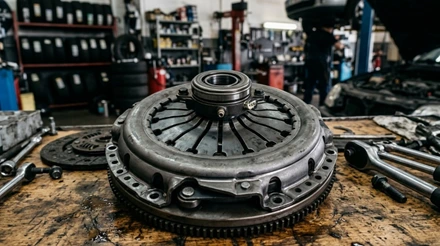
There’s no single price that suits every car. Anyone who gives you a firm figure without seeing your vehicle is really just guessing. These are the factors that usually make the biggest difference:
- Your car’s layout. The gearbox normally has to come out to reach the clutch, and on some front-wheel and all-wheel drive cars that takes a lot more labour than on others.
- The condition of the flywheel. If the clutch has been slipping for a while, the flywheel may need to be machined or replaced.
- Dual-mass flywheels. Many modern diesels, including plenty of utes, use this type of flywheel, and it usually costs more than a standard one.
- Other worn parts. A clutch job often includes the disc, pressure plate and release bearing, and hydraulic parts like the slave cylinder may need attention too.
- Contamination. If an oil leak caused the slip, the leaking seal also needs to be repaired.
Before any work begins, ask for a written quote that covers both parts and labour. WA’s Consumer Protection WA Consumer Protection points out that under the Australian Consumer Law, a repairer can’t charge you for work you haven’t approved. If extra problems turn up during the job, ask for the additional work to be explained and put in writing before you agree to it.
Simple Habits That Help Your Clutch Last Longer
- Keep your foot off the pedal. Only use the clutch when you’re actually changing gears, not as a footrest.
- Use the handbrake on hills. Don’t hold the car on a slope with the clutch.
- Pick neutral at long red lights. Sitting with the pedal pressed down adds wear you don’t need.
- Pull away gently. Low revs are all you need to get moving.
- Change gears in one smooth action. Avoid half-pressing the pedal or riding it between shifts.
- Fix oil leaks early. Have any oil leak checked before it has a chance to reach the clutch.
Not Sure What’s Going On? Talk to Morley Tyre & Auto Centre
If your car is revving harder than it should, smells hot after a drive, or just doesn’t feel right, it’s worth having it looked at before a small problem becomes a bigger one. At Morley Tyre & Auto Centre, every job starts with a thorough inspection. Our mechanics find the actual problem, explain your options clearly, and give you an itemised quote before any work begins.
We regularly help drivers from Dianella, Noranda, Bayswater, Bedford and Bassendean. Call us on (08) 9276 3488 or get in touch online to book a time that suits you.
Frequently Asked Questions
Can a slipping clutch fix itself?
No. Worn friction material doesn’t grow back, and oil on the disc won’t disappear by itself. Sometimes a clutch that slipped once after a tough hill start feels normal again after it cools down, but that heat can still leave lasting damage. If the slipping comes back, it’s time to have it inspected.
How many kilometres does a clutch usually last?
There’s no fixed number. Many clutches last well beyond 100,000 km, while others wear out much sooner because of city driving, towing or heavy loads. If you’re buying a second-hand manual, the clutch’s history is often a mystery, so a pre-purchase inspection can help you avoid an expensive surprise.
Can automatic cars have a slipping clutch?
Yes, especially dual-clutch automatics. These use clutches that work a lot like a manual’s, only controlled by the car’s computer. As they wear, they can slip, judder or hesitate when pulling away, so they’re worth checking if your automatic starts to feel this way.
Can I check my clutch fluid myself?
On most cars with a hydraulic clutch, yes. Many use brake fluid, and some share a reservoir with the brakes, so check your owner’s manual to find the right reservoir and fluid type. If the level is low, there’s probably a leak somewhere. Topping it up may help in the short term, but it won’t fix whatever is causing the leak.