What Does an Extended Car Warranty Cover for Repairs?
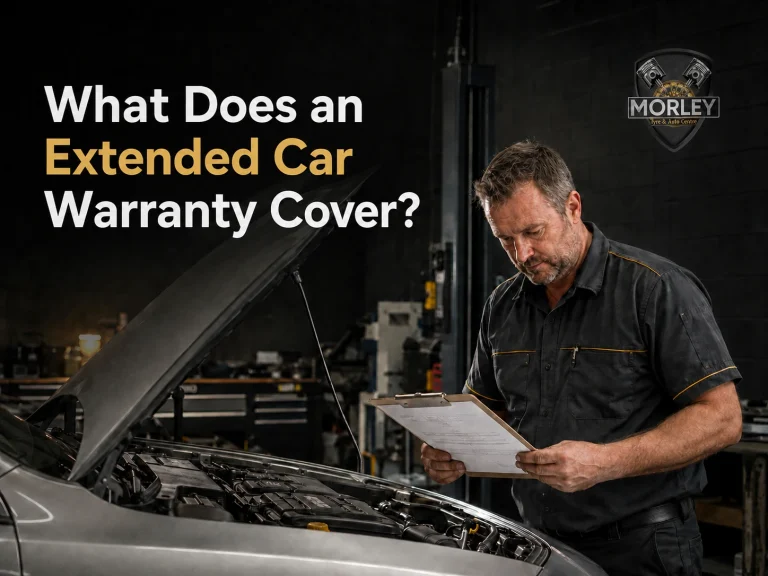
An extended car warranty covers repairs to the parts listed in your policy when they fail in a way that meets the contract terms. It does not cover every fault, and it does not replace the rights you already have under Australian Consumer Law.
The cover can include selected engine, transmission or electrical components, while maintenance, normal wear and excluded parts may sit outside the policy. WA drivers should also know that some used vehicles bought from licensed dealers have a statutory warranty at no extra cost.
Disclaimer: This article provides general information for Australian motorists. It is not legal, financial or insurance advice. Warranty and insurance terms vary, so read the contract or Product Disclosure Statement (PDS) before making a decision.
What Does an Extended Car Warranty Cover?
An extended car warranty covers the components named in the contract when they suffer a failure that meets the policy terms.
The ACCC explains that warranties are voluntary agreements that can provide extra protection for a product. An extended warranty is bought separately and may or may not give you rights beyond the consumer guarantees that already apply.
The parts covered depend on the policy. A warranty may include selected components within the engine, transmission, drivetrain, cooling system, electrical system, steering, suspension or air conditioning.
The advertised description should not be treated as the full list of cover. For example, “engine cover” does not necessarily mean every engine component is included.
The contract may also contain a claim limit, excess, servicing conditions or rules about where the vehicle can be repaired.
What Repairs Are Covered by an Extended Warranty?
A repair may be covered when a listed component fails for a reason accepted by the policy and the claim meets its conditions.
Routine maintenance is different from a mechanical breakdown. This is why the same vehicle can have one repair accepted while another is excluded.
|
Repair or cost |
Possible cover |
What to check |
|
Engine component failure |
Possibly |
Covered part and claim limit |
|
Transmission component failure |
Possibly |
Exact component listed |
|
Electrical fault |
Depends |
Exclusions and conditions |
|
Cooling system failure |
Depends |
Covered components |
|
Suspension failure |
Depends |
Part and cause of failure |
|
Worn brake pads |
Usually excluded |
Wear and maintenance terms |
|
Oil and filter service |
Usually not |
Servicing terms |
|
Diagnostic costs |
Depends |
Claim conditions |
So, extended warranty car repairs depend on three things: the failed part, the reason it failed and the wording of the policy.
If your vehicle develops a warning light, car diagnostic testing can help identify the fault before you speak with the warranty provider. Morley Tyre Centre states that its diagnostic service uses diagnostic scanners to identify vehicle faults and provides an explanation and quote before repair work starts.
Does an Extended Warranty Cover Engine Repairs?
An extended warranty can cover engine repairs, but the policy may only cover specific engine components.
For example, the contract may include certain internal parts while excluding maintenance items or damage linked to a condition in the policy. That means seeing “engine” listed as a covered system does not automatically make every engine repair claimable.
Before assuming a claim will be accepted, check which component failed, why it failed and whether the provider needs to approve the repair first.
This is especially important with a major engine repair because the cost can involve several parts and labour charges.
Does an Extended Warranty Cover Transmission Repairs?
Some extended warranties cover transmission repairs, but the exact parts included vary between policies.
A transmission contains several individual components, so a policy that advertises transmission cover may still exclude particular parts or types of failure.
Routine servicing is also different from a breakdown. If your vehicle begins slipping between gears, struggles to select gears or develops an unusual transmission noise, have the problem assessed and check the warranty procedure before approving major work.
What Is Not Covered by an Extended Car Warranty?
The extended car warranty exclusions can be just as important as the parts listed under cover.
Normal wear, scheduled servicing and excluded components may not qualify for a claim. A policy can also contain conditions relating to pre-existing faults, maintenance, vehicle use or accident damage.
Brake pads are a simple example. They wear as the vehicle is driven, so replacing worn pads is different from repairing a component that has failed unexpectedly.
The same applies to oil, filters and routine servicing. These are part of maintaining the vehicle rather than repairing a covered mechanical failure.
Always read the exclusions alongside the covered-components section. This gives you a clearer idea of what the policy actually provides.
Does an Extended Warranty Pay for Parts and Labour?
An extended warranty may contribute towards parts and labour for a covered repair, but the amount can be subject to limits.
The policy may set a maximum claim amount, labour rate or excess. It may also have separate conditions for diagnostics, dismantling, towing or other costs connected with the repair.
Some contracts can also contain betterment provisions. This may affect what you pay when a repair leaves the vehicle in a better condition than before the fault.
Before major work starts, ask the provider what has been approved and what costs will remain yours.
How Does the Extended Car Warranty Claim Process Work?
The extended car warranty claim process starts with checking the policy and confirming what has failed.
Have the vehicle inspected or diagnosed so there is a clear record of the fault. Then contact the warranty provider and give it the information it requests.
If the policy requires approval before repairs begin, make sure you receive that approval first. Keep the diagnosis, quote, service records, invoices and communications with the provider.
This paperwork can be useful if the provider questions the claim or you need to challenge its decision later.
What Happens If an Extended Warranty Claim Is Rejected?
If your claim is rejected, ask the provider to explain the decision and identify the clause or exclusion it relied on.
Ask for the decision in writing and keep the documents connected with the claim.
If the product is insurance, Moneysmart explains that you should first use the insurer’s internal dispute resolution process. If the complaint remains unresolved, you may be able to take it to the Australian Financial Complaints Authority (AFCA) for free external dispute resolution.
However, not every product sold as an extended warranty is insurance. Check how your particular product is classified before relying on an insurance complaints process.
What Is the Difference Between an Extended Warranty and Mechanical Breakdown Insurance?
The two terms can be confusing because they can describe different types of products.
ASIC explains that an extended warranty can amount to a contract of insurance depending on its terms and circumstances. The classification can affect the rules that apply to the product.
Moneysmart information on mechanical breakdown insurance describes it as an extended warranty that generally covers original components and fittings against mechanical failure or defect.
It also states that this cover does not begin until the new-car warranty expires.
That waiting period is worth checking before you buy. If your manufacturer’s warranty lasts three years and the additional cover begins afterwards, the mechanical breakdown policy may not respond during those first three years.
Check the PDS or contract for the start date, end date, exclusions, claim limits and complaint process.
What Rights Do You Already Have Under Australian Consumer Law?
An extended warranty does not remove your rights under Australian Consumer Law.
The ACCC explains consumer guarantees for new and second-hand cars bought from licensed dealers. These guarantees apply automatically when the relevant requirements are met.
If a vehicle has a major problem, a consumer may have the right to choose a repair, replacement or refund. For a problem that is not major, the seller may still need to provide a remedy.
Consumer guarantees also do not simply disappear because a manufacturer’s warranty has ended. The ACCC has explained that a consumer guarantee may still apply after a warranty expires, depending on factors such as the nature of the vehicle, its price and the circumstances of the problem.
That makes one question worth asking before buying extra cover:
What does this extended warranty add to the rights I already have?
In WA, some used cars bought from licensed dealers come with a statutory warranty at no extra cost.
Consumer Protection states that the scheme can apply to cars with a cash price of $4,000 or more, including GST, subject to the vehicle’s age and kilometres.
|
Vehicle at sale |
Statutory warranty |
|
Up to 10 years old and up to 150,000 km |
3 months or 5,000 km, whichever comes first |
|
Over 10 and up to 12 years old, with 150,000–180,000 km |
1 month or 1,500 km, whichever comes first |
|
Outside the age or kilometre limits |
No statutory warranty under this scheme |
The warranty period is extended by the time the dealer has the vehicle for warranty repairs. Consumer Protection also states that the dealer must provide an information statement explaining the statutory warranty that applies to the vehicle.
This protection is separate from an optional extended warranty, so WA buyers should check what protection already comes with the car before paying for additional cover.
What Changed for Extended Car Warranties in WA in 2026?
WA Consumer Protection has launched an inquiry into extended motor vehicle warranty sales following complaints about high-pressure sales tactics, unclear terms and products that may duplicate protections available under Australian Consumer Law.
The inquiry covers extended warranty purchases made between 1 January 2023 and 30 June 2025.
Consumer Protection also noted that these products can be marketed under names such as “product care”, so buyers should look beyond the name of the product and read the actual terms.
The inquiry does not mean every extended warranty is unsuitable. It does give WA buyers another reason to check what they are paying for and what protection the policy adds.
What Should You Check Before Buying an Extended Warranty?
Before signing, read the contract or PDS rather than relying only on the salesperson’s explanation.
Check the covered parts, exclusions, claim limits, excess, servicing requirements, kilometre limits, repairer rules and approval requirements. Also check when the cover starts and ends.
It is worth checking the cancellation terms too, especially if the warranty is being offered as an add-on when you buy a vehicle.
Moneysmart says add-on car insurance sold through dealers can be poor value and warns consumers to consider whether they need the extra cover. It also advises buyers to check the costs, exclusions and terms before agreeing to an add-on product.
Can You Cancel an Extended Car Warranty?
Cancellation rights depend on the product you bought.
For insurance products, Moneysmart says there is generally a cooling-off period of around 30 days, during which you can usually receive a full refund. A partial refund or cancellation fee may apply after that period, depending on the policy.
There is also a four-day deferred sales rule for add-on car insurance. A salesperson must wait four days after the vehicle purchase before selling the insurance. If the rule is broken, the buyer can cancel and receive a full refund.
These are insurance rules, so check how your particular product is classified before relying on them.
Morley Tyre Centre Can Help With the Mechanical Side
A warranty provider needs to know what has actually failed before it can assess a repair claim. Having the vehicle properly checked can give you a clear diagnosis and repair estimate to take back to the provider.
Morley Tyre Centre provides mechanical servicing, diagnostics, inspections and repairs in Morley. The workshop states that vehicles are inspected and an itemised quote is provided before additional work proceeds.
If your vehicle is showing a fault or needs a mechanical inspection, Morley Tyre Centre can assess the vehicle and explain the repair work required. You can then take the diagnosis and quote to your warranty provider before deciding how to proceed.
FAQs
Does an extended warranty cover a car’s battery?
It depends on the policy. Batteries can have separate conditions or exclusions, so check the covered components and exclusions sections rather than assuming they are included.
Can I choose my own mechanic for an extended warranty repair?
Not always. Some policies set conditions about who can carry out repairs or require approval before work starts. Check the repairer section of your contract before booking major work.
Does an extended warranty cover a recalled vehicle?
A recall and a warranty claim are different matters. If your vehicle is subject to a safety recall, check with the manufacturer or relevant authority about the recall work rather than assuming the extended warranty applies.
Does an extended warranty cover towing after a breakdown?
It depends on the policy. Some products may include roadside assistance or towing benefits, while others deal only with specified mechanical repairs.